
Free Online Stamp Price Guide 2026
Every tool, database, and method you need to look up the value of any stamp — completely free.
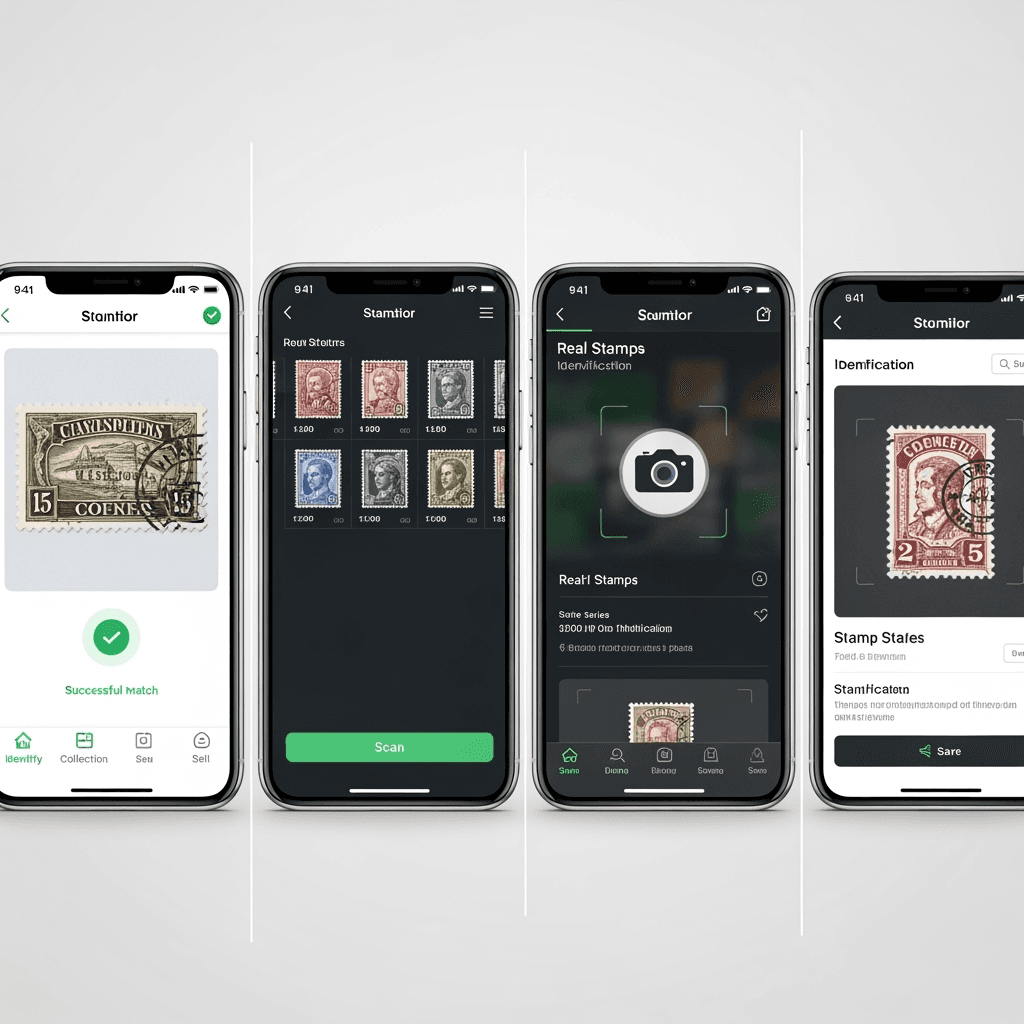
Looking for a free online stamp price guide? You don't need to buy expensive catalogs or hire an appraiser to find out what your stamps are worth. In 2026, there are powerful free tools — from AI-powered apps to community databases — that can give you accurate stamp values in seconds. This guide covers every free method available.
Complete List of Free Stamp Price Resources
| Resource | Type | Best For | Cost |
|---|---|---|---|
| Stamp Identifier App | AI Mobile App | Instant photo-based ID & valuation | Free scans available |
| StampWorld.com | Online Database | Worldwide stamp catalog values | Free |
| Colnect.com | Online Database | Detailed catalog with images | Free |
| eBay Sold Listings | Marketplace Data | Real market prices | Free |
| FindYourStampsValue | Visual ID Tool | Visual stamp matching | Free (limited) |
| Scott Catalogue (Library) | Print Reference | Official US catalog values | Free at libraries |
Method 1: AI Stamp Identification (Recommended)
The fastest way to check a stamp price is using AI technology. Modern stamp identifier apps use computer vision trained on millions of stamp images to instantly recognize your stamp and pull up its current market value.
How It Works
- Download the Stamp Identifier App (iOS)
- Place your stamp on a flat, well-lit surface
- Take a clear photo through the app
- Get instant results: country, year, catalog number, and estimated value range
This method is particularly valuable when you have a large collection. Instead of manually looking up each stamp, you can scan dozens per hour and quickly sort your collection by value.
Method 2: Online Stamp Databases
StampWorld.com
StampWorld is one of the largest free stamp databases with values for stamps from virtually every country. It draws pricing from multiple catalog sources and community data. Simply search by country and year to find your stamp's catalog value.
Colnect.com
Colnect offers a massive worldwide stamp catalog with high-quality images. It's particularly useful for identifying stamps visually — you can browse by country, year, or theme. The community-driven pricing is based on collector swaps and sales.
Method 3: eBay Sold Listings
For the most accurate real-world pricing, eBay's completed/sold listings are invaluable. Here's how to use them effectively:
- Search for your stamp on eBay (use the Scott number if you know it)
- Click "Filter" → "Show only" → "Sold Items"
- Look at the range of prices for similar stamps in similar condition
- Ignore outliers (unusually high or low prices)
The key advantage of eBay data is that it shows what collectors actually paid, not theoretical catalog values. Catalog values and market values can differ significantly.
Method 4: Scott Catalogue at Your Library
The Scott Standard Postage Stamp Catalogue is the definitive reference for stamp values, especially US stamps. While buying a set costs hundreds of dollars, most public libraries carry recent editions.
To use the Scott Catalogue effectively:
- Identify your stamp's country and approximate year of issue
- Find the corresponding volume (the catalog spans multiple volumes by region)
- Match your stamp to the catalog listing using the illustration and description
- Note the Scott number — this is the universal reference ID for your stamp
- Check both mint and used values, as they can differ dramatically
Understanding Stamp Price Guide Values
When using any stamp price guide, understand that listed values are typically:
- Catalog value ≠ market value: Catalog prices are often higher than what a stamp actually sells for. Expect to get 20-50% of catalog value when selling common stamps.
- Condition-dependent: Listed prices assume a stamp in "Fine" to "Very Fine" condition. Damaged stamps are worth far less.
- Market-fluctuating: Stamp values change over time based on collector interest and market conditions.
- Grade-sensitive: A "Superb" grade stamp can be worth 3-5x the catalog value, while a "Good" grade might be worth 25% or less.
Country-Specific Price Guides
US Stamp Values
For American stamps, the Scott Catalogue is the gold standard. Key valuable US stamps include pre-1900 classics, early airmail issues, and printing errors. Check our US stamp values page for more details.
UK Stamp Values
British stamps use the Stanley Gibbons catalog system. Key valuable periods include Victorian-era Penny Blacks and Reds, King Edward VII issues, and early Queen Elizabeth II definitives.
European Stamp Values
The Michel Catalogue is the standard for European stamps, while Yvert et Tellier is preferred for French and French colonial stamps. Both are available at major libraries and philatelic societies.
Frequently Asked Questions
What is the best free online stamp price guide?
The best free resources combine AI tools (like the Stamp Identifier App) with online databases (StampWorld, Colnect) and real market data (eBay sold listings). No single source is perfect — cross-referencing multiple sources gives the most accurate picture.
Is there a free stamp price guide PDF?
While some outdated catalogs are available as PDFs, they quickly become inaccurate as stamp values change with market conditions. Digital tools and online databases are better because they reflect current pricing. The Stamp Identifier App provides real-time estimates.
How do I check US stamp values for free?
For US stamps, use the Stamp Identifier App for instant AI identification and valuation, check eBay sold listings for recent sale prices, or visit your local library to access the Scott Catalogue. StampWorld.com also has free US stamp values.
Start Finding Your Stamp Values Today
The best approach to finding stamp values for free is to combine multiple methods: use the Stamp Identifier App for quick AI-powered estimates on your whole collection, then cross-reference potentially valuable stamps against eBay sold data and catalog values.
With these free tools at your fingertips, there's no excuse not to know what your stamps are worth. Whether you're evaluating an inherited collection or building your own, knowledge is the most valuable tool a collector can have.